
Free tools
The whole decision, in order.
Buying well is a sequence, not a lucky find. Set the strategy, choose the market, then run the numbers on the property in front of you. It's the same order we work for clients, and every step of it is here, free. Most tools need no sign-up at all.
Step 1
Set the strategy.
Where you buy depends on what the purchase has to do: equity growth, cash flow, or a bit of both, and in what order over the next 20 years. Decide that first or every suburb looks good.
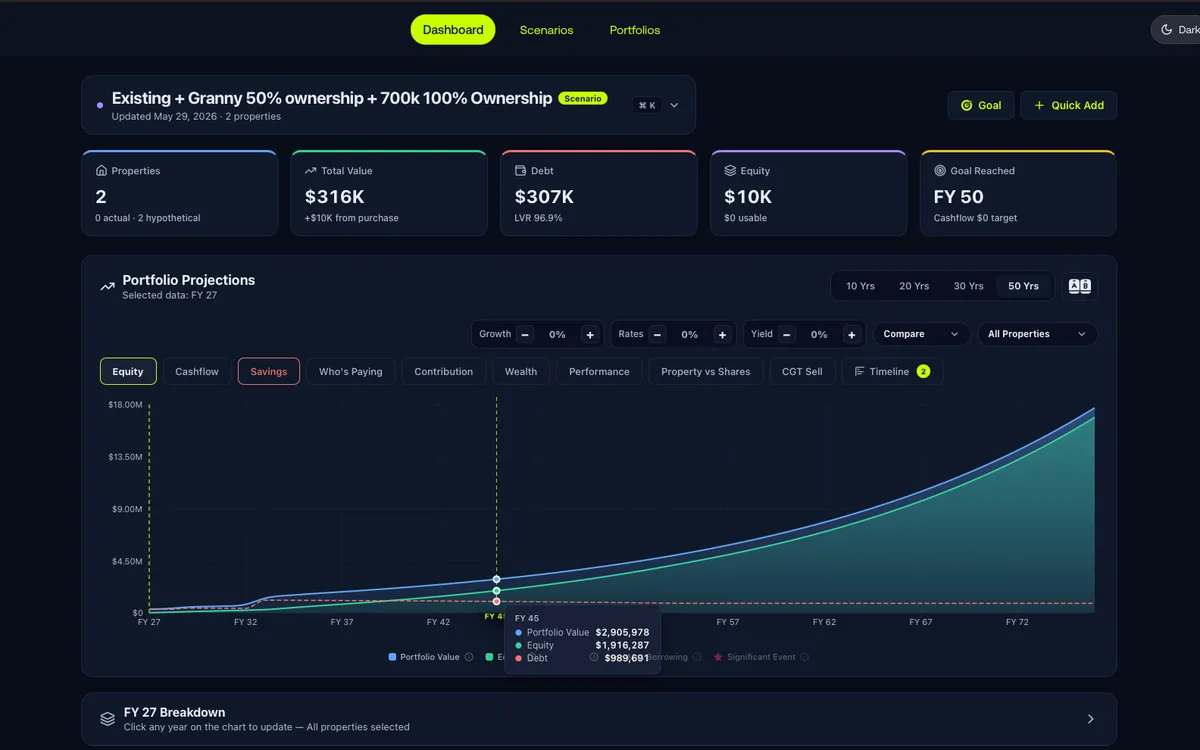
The tool from our strategy sessions
Portfolio tracker
Zapiio is the modelling tool we drive in every strategy session. Load your income, debts and properties and it projects where the portfolio lands in 10, 20 and 30 years. A free account gets you the same engine we use, minus Tom reading the output over your shoulder. This is the one that needs the sign-up, because it saves your numbers.
Want to see what a finished strategy looks like first? Read a real one, numbers and all.
Step 2
Choose the market.
Strategy set, now point it somewhere. Start wide with where the country's 453 council markets sit in the cycle, read the full report on the ones that fit, then get down to suburb level.
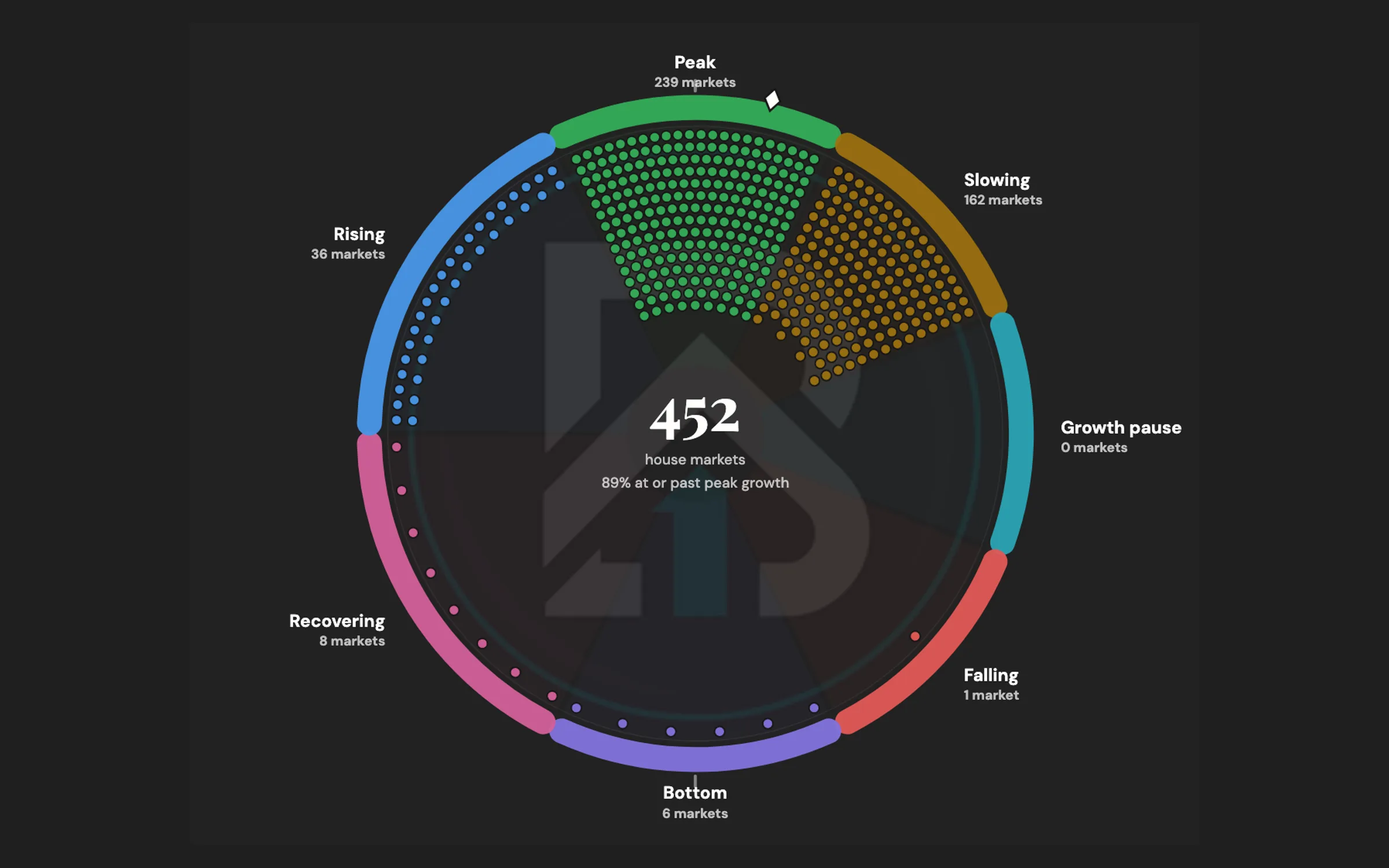
Every council area in the country
The Buyers First Momentum Dial
Most property clocks track eight capital cities. Ours tracks 453 council areas. Find yours, see whether it's rising, peaking or coming off the bottom, houses and units separately, and what the modelling expects for the next 12 months. Refreshed quarterly.
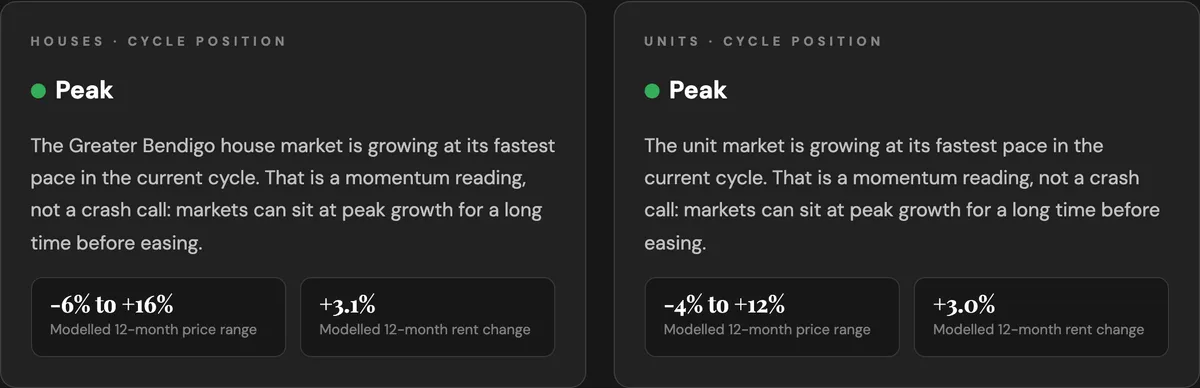
453 written reports, one per council
LGA market reports
A full written report for every area on the clock: cycle position, population trend, who owns and who rents, job creation, government building investment, and every suburb inside the council. The kind of report that gets sold in PDF form elsewhere, free and refreshed quarterly here.
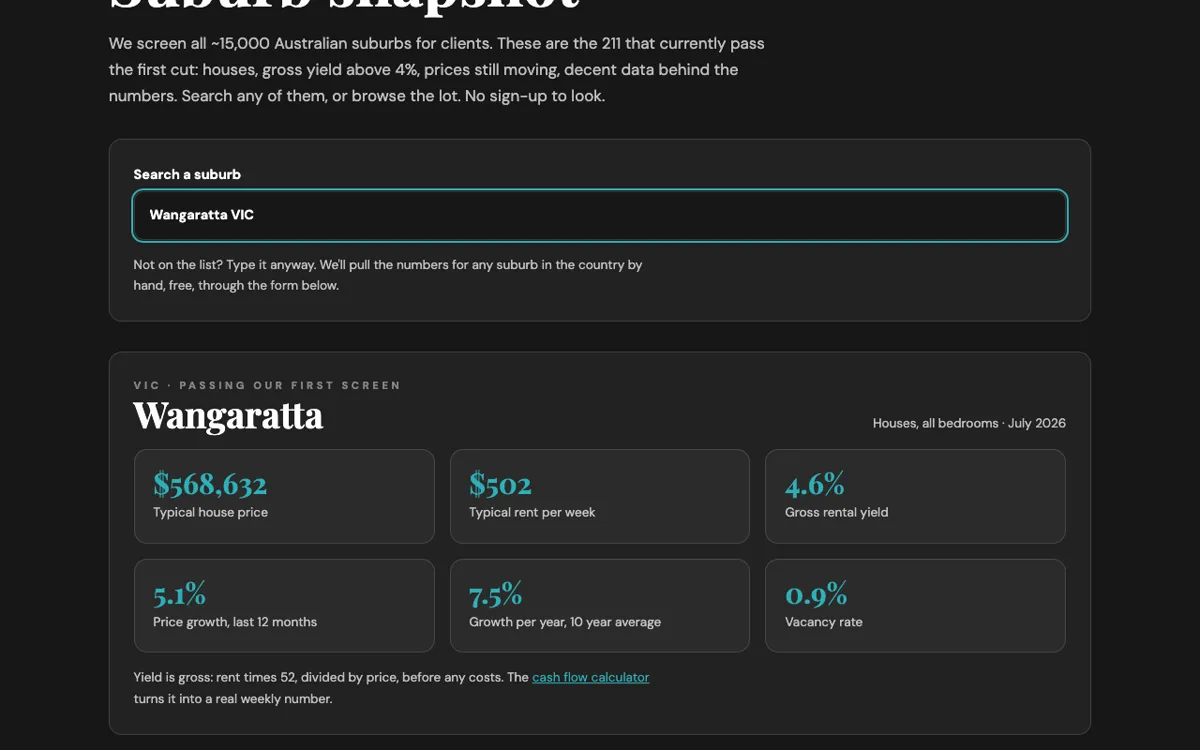
225 suburbs of live data
Suburb snapshot
Typical price, rent, yield, growth and vacancy, suburb by suburb, free to browse. Information, not a shortlist: we don't run a fixed screen, because the right market depends on your strategy. Any suburb that isn't loaded yet, we'll pull by hand.
Step 3
Run the numbers on the property.
A good suburb doesn't make every listing in it a good buy. Before an offer goes in, know what the property returns, what it costs to hold, what could be added to it, and what 40 checks say about the risks.
2027 tax rules built in
Growth & negative gearing calculator
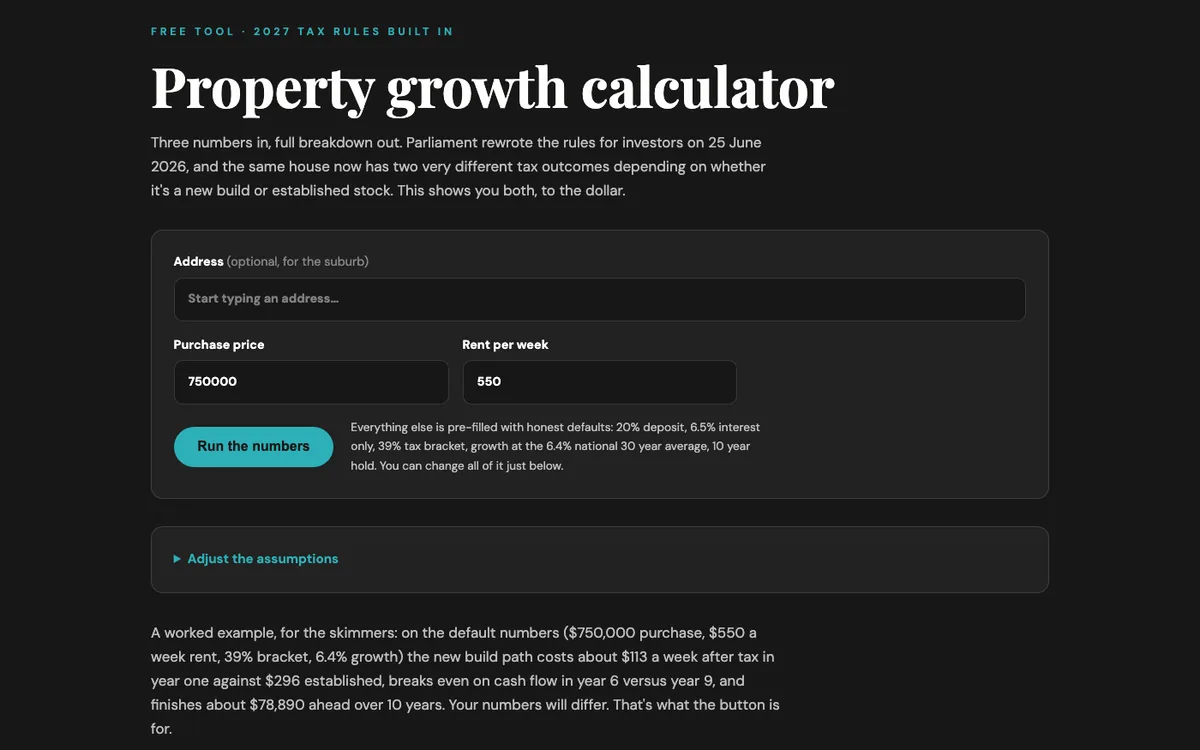
Parliament changed the rules for investors on 25 June 2026. From 1 July 2027, negative gearing only exists on new builds, and the 50% capital gains discount is gone for established stock. Type in an address, put in your numbers, and see both paths side by side.
The weekly number, honestly
Cash flow calculator
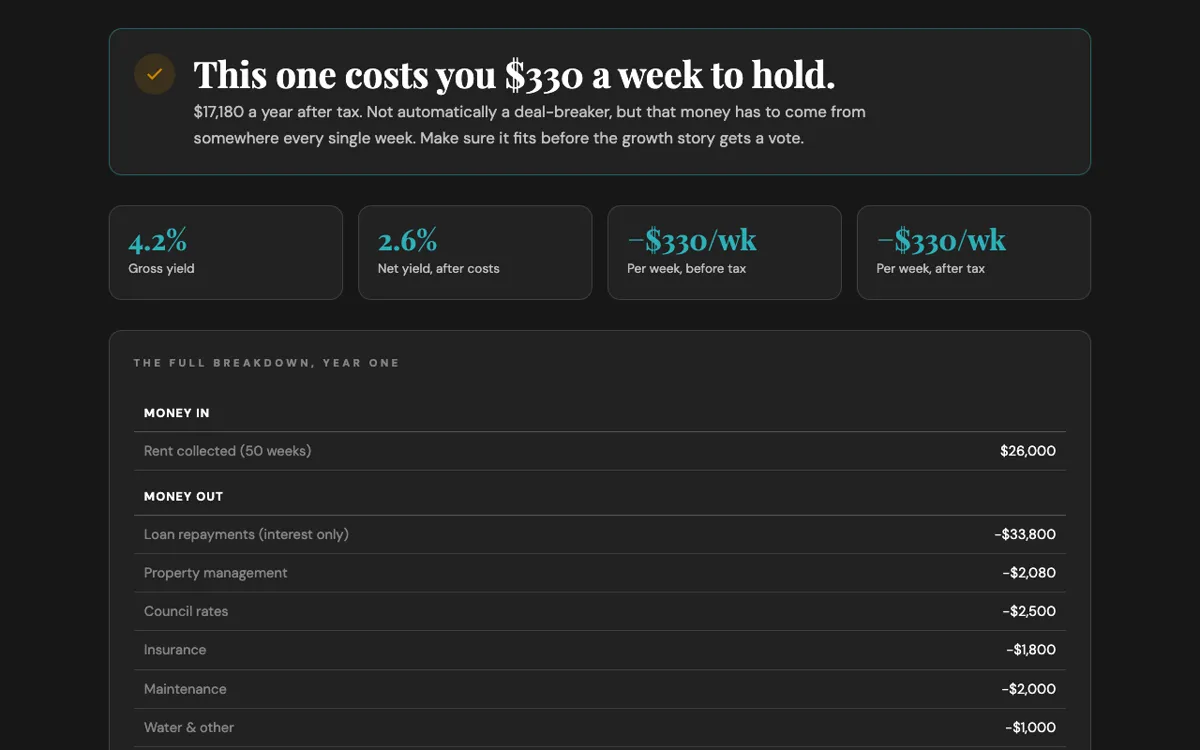
What the property actually costs or pays you each week after the mortgage, agent, insurance, rates, maintenance and tax, including stamp duty and land tax for all eight states and territories, plus stress tests for higher rates and lower rent.

30 second check
Granny flat feasibility analyser
Type in the address and the analyser reads the lot size, setbacks and site coverage, then gives you a straight yes, no or tight squeeze on whether a granny flat fits. To be clear, it's a screening tool, not planning advice.
Before the offer goes in
40-point due diligence checklist
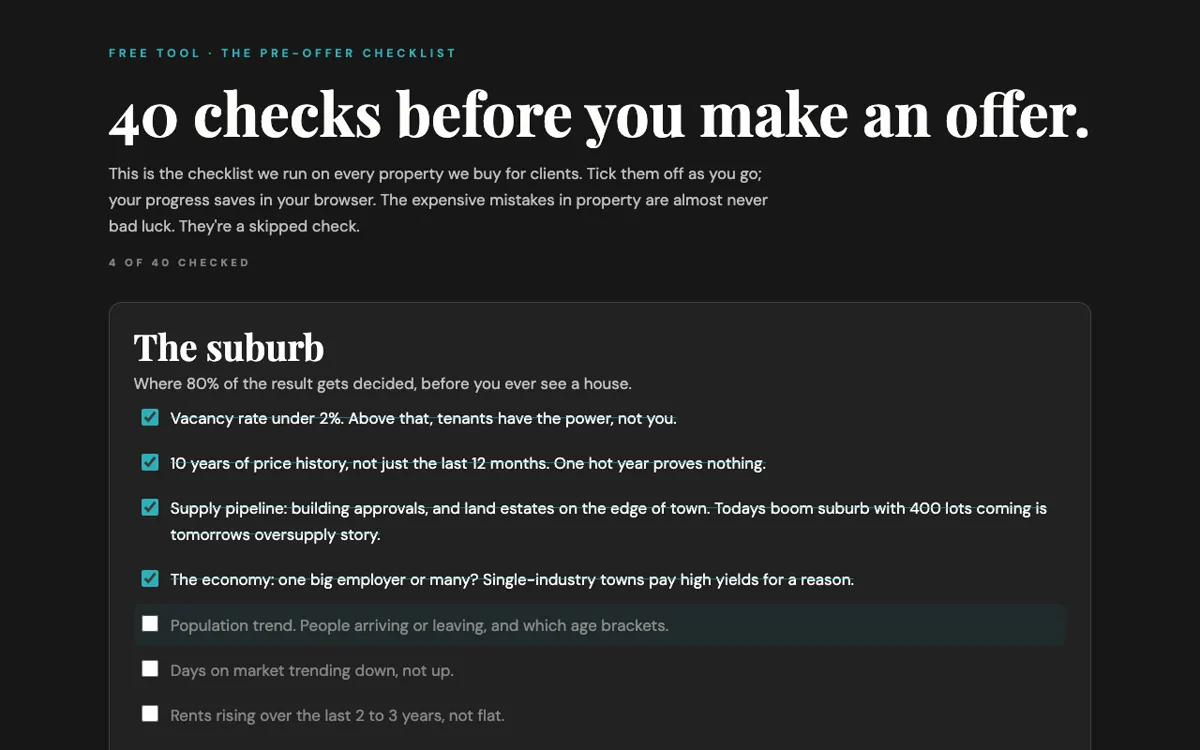
The pre-offer checklist we run on every purchase: suburb, street, building, contract, numbers. Work through it on the page for any property you're circling, and print it for the next one.
Step 4
After you buy.
The decision doesn't end at settlement. Keep the paperwork straight and check the properties you already own are still pulling their weight.
Every ATO category, deduction traps flagged
Rental property tax time organiser
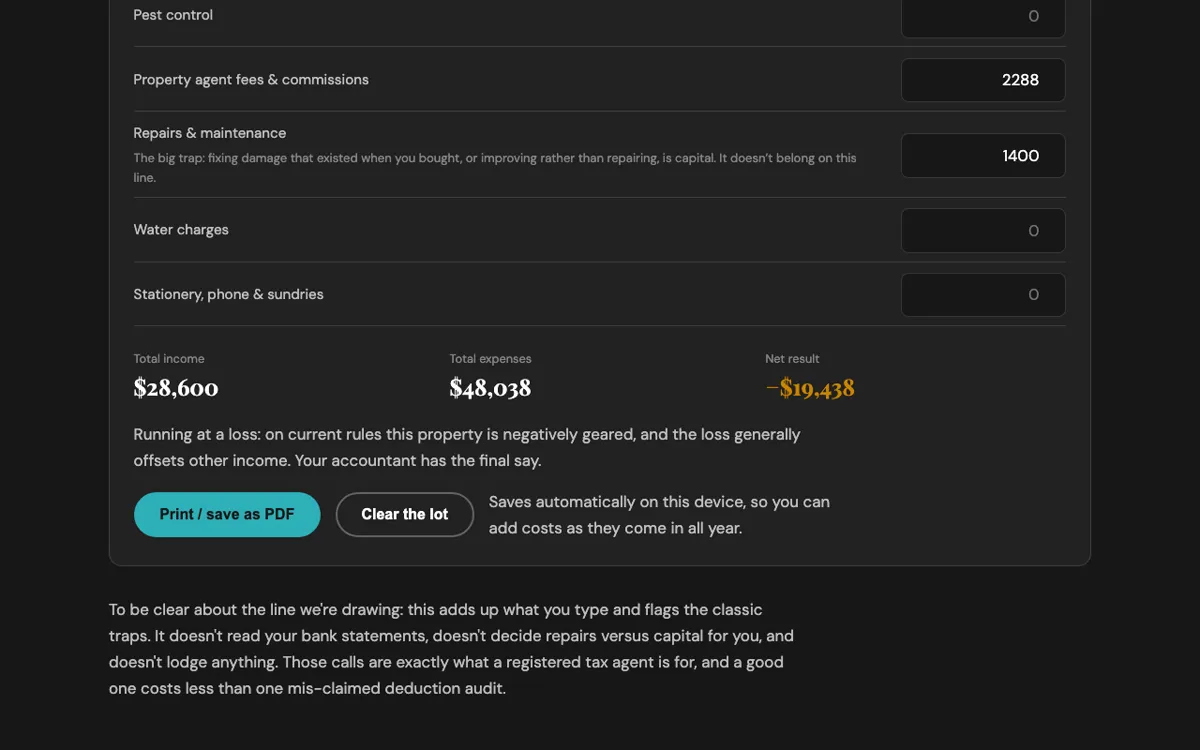
Every category from the ATO rental schedule as a worksheet, with the classic traps flagged: repairs versus capital works, borrowing costs, travel, second-hand plant. Totals up into an accountant-ready summary. Your figures never leave the browser.

Already own property?
Free property health check
Value movement, rent versus market, and where your suburb is heading, written up by hand for property you already own. No pitch in the report, ever. That's the rule our client check-ins run on, and it applies here too.
Honestly, tools like these are the easy 10%. The other 90% is knowing which suburb, which street and which contract clause, and that's the part we get paid for. If the numbers here look interesting, that's the moment to talk.
One call. Then you'll know either way.
Free, no obligation, and if we're not the right fit I'll say so on the call.